On Earth as it is in Heaven (Freedom in Forgiveness) pt5
All Scripture reference taken from the New Living Translation
Here we are back in our series on the Lord’s Prayer... We are starting the second half, which means we have four more weeks to go...
The Lord’s Prayer is probably the most famous prayer in America, most people know it, or have heard of it...
My hope is that this series will help us get to a place where we can meditate on some of the attributes and characteristics of God through this prayer...
While also focusing on bettering ourselves... And ultimately entering a place where we can quiet our hearts... quiet our minds... And start some dialogue with God...
This is a prayer that can be used to open the lines of communication with our Creator in a way that draws us closer to Him...
To give a quick summary of what we’ve covered in the first half of this prayer... We have...
Connection (Our Father in Heaven) ... Reverence (May Your name be kept holy) ... Experience (May Your Kingdom come) ... Surrender (May Your will be done) ... Dependence and provision (Give us today this food we need) ...
These are all ways that draw us closer to our Father in heaven, and help us experience the Kingdom in the way Jesus intended when He walked the earth...
Now... Today and next week may be some tough topics to unpack as it has to do with forgiveness...
Today we are going to look at the freedom that is found in forgiveness, and next week how the freedom in forgiveness also means letting go of hurts and offenses...
Remember, when Jesus taught this prayer in the Gospel of Matthew He was speaking to a large crowd, and in Luke (Chp. 11) it was a private setting with just the disciples...
In Matthew He says, when you pray, pray like this...
Matthew 6:9-12 - Our Father in heaven, may your name be kept holy. May your Kingdom come soon. May your will be done on earth, as it is in heaven. Give us today the food we need, and forgive us our sins, as we have forgiven those who sin against us.
As the focus shifts from how much we rely on God to supply all our needs each day...
To a topic that may be tough for some to face... And that is, forgiveness...
Matthew 6:12 - And forgive us our sins, as we have forgiven those who sin against us.
Father, forgive me... Seeking forgiveness... Asking to be forgiven... Is the first step to finding freedom in Jesus!
But for many, that’s not always where we start...
One of, if not the, biggest obstacle that keeps us from being all God created us to be, is unconfessed sin...
Why? Because hidden sin, unconfessed sin, hinders the plans and purpose God has for our life...
Hebrews 12:1 - ... Let us strip off every weight that slows us down, especially the sin that so easily trips us up. And let us run with endurance the race God has set before us.
Life is a marathon... We all have a race to run... The goal is not to outrun the person next to us... This is not a competitive kind of race...
We each have our own race to run in which God calls us to join Him in the plans and purpose He has set before us...
This race set before us is what gives our life meaning and purpose...
But the truth is... Many people never cross the finish line of their marathon as God intended, because their path gets cluttered by the sin that so easily trips them up...
And the sin that so easily trips them up gets heavier and heavier to carry as life goes on...
This weight we carry is guilt and shame... And it is the byproduct of sin...
And we don’t realize how much of a hindrance it is... Or how heavy a weight we are carrying, until we receive forgiveness.
Now, here’s the thing... None of us are faultless... We all make mistakes...
Romans 3:23-24 - 23 For everyone has sinned; we all fall short of God’s glorious standard. 24 Yet God, in his grace, freely makes us right in his sight. He did this through Christ Jesus when he freed us from the penalty for our sins.
All of us fall short of God’s glorious standard... But the moment we accept what Jesus did for us on the cross...
We are forgiven... Jesus makes us right in God’s eyes and we are free from sin...
Not free to sin... Free from sin... Freedom in Jesus is found!
Unfortunately, guilt and shame causes regrets and remorse...
And often, these feelings keep us from coming to Jesus seeking forgiveness...
We are embarrassed and ashamed...
And this leads us to getting stuck in our shame... We get stuck in the problems our mistakes caused and instead of freedom, we live in this cycle of turmoil...
So, we repress it... We excuse it... Or we do what is even worse... We justify and rationalize our behavior...
Rationalizing our behavior is the worst thing we can do because we are trying to convince our mind that it’s ok what our heart is telling us is wrong...
The endless cycle of rationalizing our behavior then gives birth to guilt...
And guilt is a very self-destructive emotion... It destroys our confidence... It defeats our potential... It damages relationships...
Guilt even wears away at our health... God did not design us to carry around guilt.
Proverbs 28:13 - People who conceal their sins will not prosper, but if they confess and turn from them, they will receive mercy.
Church, when we understand the freedom that comes with forgiveness...
When we experience the restoration that comes with forgiveness...
And we practice the act of asking for forgiveness... Specifically... Not just in general... (Jesus, please forgive me and then be specific) ...
When we do this, the door to spiritual freedom will be opened... And in comes a life of a clear conscience... A life of no guilt... A life full of joy... Real joy...
A life of blessing and a life God will use to the fullest extent is what we experience!
And it starts with confession... Confession is a powerful thing...
James 5:16 - Confess your sins to each other and pray for each other so that you may be healed. The earnest prayer of a righteous person has great power and produces wonderful results.
This is an interesting verse that I believe carries a lot of weight... It holds a lot of Kingdom of God spiritual power...
Most versions of the Bible say, “Confess your sins.” But the KJV says faults, and the NKJV says trespasses.
Confess to one another the sins, the faults, the trespasses that so easily trip us up...
Because confession is what helps us strip off the weight that slows us down, and gives us the freedom to run with endurance the race God has set before us...
This is why it is so important that we are part of a small group (Life Group) ...
So that we can share with others, and talk to others about the things that keep us from being all we can be in Christ Jesus...
Confession brings healing... Seeking forgiveness brings healing... Healing in all areas... Physical, mental, and spiritual healing...
Healing from the discouragement, and guilt and shame that we carry as a result of unrepentant sin... Unconfessed sin...
The prayer of a righteous person has great power and produces wonderful results!
Who is a righteous person? Anyone who does their best to live according to the Scriptures...
The moment we accept what Jesus did for us on the cross we are made right with God... We have right standing with God (Romans 3:23)
I think it’s fair to say that we can connect James 5:16 with...
Hebrews 10:24-25 - Let us think of ways to motivate one another to acts of love and good works. And let us not neglect our meeting together, as some people do, but encourage one another...
Serving God and serving people... When we are motivated by others to serve in love and acts of kindness through good deeds...
We grow in humility as we recognize what God is doing through us... As we join Him in what He is calling us to do...
This is what draws us closer to God... And when we’re drawn closer to God a repentant heart often follows...
So, let’s not neglect meeting with others... Let’s not live lives of isolation... But stay in routine fellowship with others and encourage one another...
This is what helps clear the path to a fresh start and a clear conscience...
Matthew 6:12a – Forgive us our sins...
Some other ways to seek forgiveness... Or some other ways to lay down the weight of the sin that so easily trips us up is to...
Is to start with examining our lives according to God’s ways...
Lamentations 3:40 – Let us test and examine our ways. Let us turn back to the Lord.
Psalm 139:23-24 - 23 Search me, O God, and know my heart; test me and know my anxious thoughts. 24 Point out anything in me that offends you, and lead me along the path of everlasting life.
Are we willing to lay it all out before God and allow Him to search our hearts?
To reveal to us who we really are on the inside...
Because who we are on the inside is eventually revealed to those around us as it always has a way of becoming external at some point...
We often project what’s going on internally to those closest to us...
“God, forgive me of my sins... Search me O God, and point out anything in me that offends You.”
This is more than giving God five minutes of our time for Him to search our hearts.
It ought to become a lifestyle... A routine part of our Christian faith...
This is something that is done through the reading of His Word and the listening of His voice...
Hebrews 4:12-13 - 12 For the word of God is alive and powerful. It is sharper than the sharpest two-edged sword, cutting between soul and spirit, between joint and marrow. It exposes our innermost thoughts and desires. 13 Nothing in all creation is hidden from God. Everything is naked and exposed before his eyes, and he is the one to whom we are accountable.
It is the Word of God that exposes who we really are to ourselves...
And if we are humble enough and serious enough to allow God to search our hearts
Then as we read His Word and we come to a passage or a verse where God is pointing something out...
It’s time for us to look in the mirror and assess what it is that God is pointing out as an offense that requires us to seek forgiveness...
Let’s not hide from God, but come to Him seeking forgiveness... For He understands what it is that so easily trips us up... He gets it... Listen to this...
Hebrews 4:14-16 - 12 For the word of God is alive and powerful. It is sharper than the sharpest two-edged sword, cutting between soul and spirit, between joint and marrow. It exposes our innermost thoughts and desires. 13 Nothing in all creation is hidden from God. Everything is naked and exposed before his eyes, and he is the one to whom we are accountable.
(The title high priest means holy and set apart)
Church, there isn’t a thing we will face that Jesus hasn’t already faced... And overcome...
The moment we accept what Jesus did for us on the cross, we are given the access to boldly come to the throne of our gracious God to obtain mercy, and find grace in our time of need...
Let us come boldly to our Father in heaven to seek the forgiveness of our sins...
And in this boldness, freedom is found...
In Closing...
Church, seeking forgiveness is a topic that causes many to shy away from because it means facing what it is that we need to repent of...
And many of us feel the wrath of God will be experienced because we think He is unhappy with us...
Well, He may not be pleased with who we are behind closed doors...
But who we are behind closed doors often comes out in the open...
And the longer we go without repenting and seeking forgiveness, the easier it is to justify and rationalize our behavior...
And the more we justify and rationalize... The heavier the guilt and shame of that unrepentant sin is that we are carrying around with us...
God is a God of grace and mercy who loves His children... His wrath is reserved for those who have rebelled against Him and deny Him...
So let us come boldly to the throne of our gracious God, and seek the forgiveness needed so we can run with endurance the race He has set before us...
And...
1 John 1:9 - But if we confess our sins to Him, he is faithful and just to forgive us our sins and to cleanse us from all wickedness.
God is good and He is a God who forgives all sin so that we can live in freedom!
History Of The Pumpkin Show
Circleville, Ohio
This far-famed and unique agricultural exhibit and street fair had its humble origin in October, 1903, when George R. Haswell, then Mayor of Circleville, and superintendent of the water works, conceived the idea of holding a small exhibit in front of his place on West Main Street. Corn fodder and pumpkins (many of them cut into Jack-O-Lanterns) formed the principal decorations, and were responsible for it being dubbed "the pumpkin show". On the following year Mr. Haswell was joined by some enterprising neighborhood merchants and the exhibition grew steadily in its scope, interest and attendance. The first merry-go-round was set up at the corner of Main and Scioto Streets for the 1905 show.
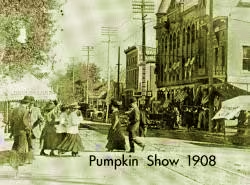
Later a permanent organization (of which the Mayor is always president in honor of the founder) made up entirely of volunteers, resolved to hold an annual Pumpkin Show on the streets of Circleville for the purpose of maintaining and promoting a more friendly relationship with the patrons and visitors of the community, and to further promote and extend agricultural pursuit and to award premiums for the display of grain, fruits and vegetables, school displays, and such other displays that are best calculated to promote the best interests of Circleville and Pickaway County.
Every effort to keep the Pumpkin Show fair, clean and above reproach in every respect has contributed largely to its becoming the sixth largest festival in the United States with an annual attendance in four days and nights of over 300,000 persons and its claim to being the "GREATEST FREE SHOW ON EARTH" as no admission charge or entry fee is made.
On August 8, 1946 a non-profit corporation, the Circleville Pumpkin Show, Inc., was formed for the operation of the Pumpkin Show and any profits to be derived from the Show was to be used for the betterment of the citizens and several thousands of dollars have been turned over to the City of Circleville for community projects. The Circleville Pumpkin Show receives no subsidy or support and must operate on income and donations and is entirely self-supporting, even to the point of reimbursing the City of Circleville for the additional expense of extra police duty and all extra duty help employed by the City for the purpose of conducting the Circleville Pumpkin Show.
No special recognition is given any individual or group of individuals as the success of the Show is due to complete cooperation of everyone in Circleville and the Pickaway County area. The Circleville Pumpkin Show really is best explained by the Third Article of the Constitution which reads as follows:
"The purpose or purposes for which said corporation is formed are: To provide for and hold an annual Pumpkin Show upon the streets of Circleville, Ohio, and to promote and encourage fellowship among patrons, visitors, and citizens of the community, and to promote the general welfare of agriculture, manufacturing, and mercantile interests of the City and surrounding territory and to demonstrate the resources of Pickaway County, and for such other purposes as may be incident to and to all things reasonably necessary and proper to carry out said purposes."
It is the plan of the Circleville Pumpkin Show Inc. to perpetuate the Show as an annual affair, to improve features each year as interest and finances permit, and to keep our slogan "THE GREATEST FREE SHOW ON EARTH" a reality.
Why Does the Season Before Winter Have Two Names?
A look at the history of fall and autumn.
by Dan Nosowitz, Atlas Obscura November 3, 2017
There is indecision about the season that comes before winter. The plants all die, or seem to, but at the same time are at their most magnificent: they produce more fruit, turn vibrant colors. We are relieved at the end of a hot summer, and terrified of the long winter ahead. (At least those of us with seasonal affective disorder.) We cram in holidays to both celebrate these brief few weeks and also mourn the green times behind us. And we don’t even know what to call this weird time: is it autumn or fall? Why does this season have two names?
The understanding of seasons varies dramatically based on where you’re located geographically, coupled with, if applicable, which country colonized your country. In the temperate zones, the seasons are generally split up into four; in tropical zones, usually two; in South Asia, usually six. Older calendars may have five or ten or more or fewer. Countries like the US, which span multiple zones, run the gamut. The United States sticks to four seasons, even in parts of the country like South Florida and most of the Southwest, which really only have a wet season and a dry season.
The etymological roots of the English words for the seasons—summer, winter, spring, and autumn/fall—are all weird and fun in their own ways. As some of the most basic concepts language is required to describe, the words for the seasons are extremely old. “Over the centuries, these names change, rather dramatically sometimes, and also from community to community,” says Anatoly Liberman, a historical linguist who has written on the subject for the Oxford University Press. “Summer” originally dates back to the Proto-Indo-European root sem, which meant “half,” and possibly suggests that, in Europe, there were originally only two seasons. From Proto-Indo-European (the root of all major European languages) that root transformed into an array of similar words: sumor, sumar, somer, that kind of thing.
Winter similarly dates from Proto-Indo-European, this time from wed, which meant water, wet, or rainy. It splintered outwards from there; the English “winter” comes from the Proto-Germanic wintruz. My point with these is to note that the two extreme seasons, winter and summer, are very, very old words. The other two seasons? Not so much.
Until around the 16th century, the English language did not really have distinct words for either spring or fall. A survey of language used to describe springtime in Early Modern English, from the 14th to the 16th centuries, shows a whole bunch of terms: vere, primetide, and especially lenten. “This variety of terms suggests that ‘spring’ was not fully lexicalized in the language; ‘spring’ was relatively peripheral compared to winter and summer,” writes Earl R. Anderson in his book Folk Taxonomies in Early English. Same thing for fall: it was sometimes described as the time for harvest, but “harvest” was not the name of the season; it was just what you did during the late summer or early winter.
Fall was, in fact, the very last of the four seasons to become codified with a name, or even the designation as a season on par with the others. There are mentions of winter, summer, and spring in manuscripts dating back to the 12th century; the name of spring may not have been settled upon, but the idea that it was a full season came much earlier than with fall.
The word “autumn” has French roots; in modern French the word is automne. It certainly has Latin roots, coming from the word autumnus, which in turn comes from…somewhere. These etymologies are all guesswork: there was no day when everyone stopped using one and started using another, with a nice paper trail to verify it, so this is all just assumptions based on plausibly similar older words and meanings. Liberman is not particularly wowed by any of the possible origins of autumnus.
Autumn shows up in English first around the late 14th and early 15th centuries, though it coexisted with “harvest” as a loose description of the season for another 200 years.
Fall is different. It first shows up in the mid-16th century in England, primarily at first as “the fall of the leaf,” which was shortened to just “fall.” Like “harvest,” it is descriptive, but more evocative; not just a term coming from the most important action taking place during this time period, but a more poetic observation of what makes this season different. (The etymology of “fall” is not that interesting. You can trace it back to Middle English, Old English, Proto-Germanic, and then Proto-Indo-European, but in each era it basically looked like “fall” and meant “fall.”)
The recognition of fall/autumn as a distinct season started happening in England right around the time that the American colonies began to separate linguistically from British English. By the 17th century, with American colonies already established, more calls for what was called “spelling reform” began. Ever since the Norman conquest, English had been littered with scraps of French, and it was around this time that prominent writers like James Howell began to agitate for sensible wholesale changes to English. These changes were primarily in spelling—logique to logic, for example—but others took things further.
Noah Webster, of Webster’s Dictionary, was an ardent spelling reformer, but while his work was couched in doing the sensible, logical thing, his motivations were also political. He was primarily responsible for making changes to American English spelling in words like “center” (not “centre”) and “color” (not “colour”). Webster’s work was widely adopted, which goes to show that around the time of independence, the American colonies were absolutely ready to change the way they spoke and wrote as a means to differentiate themselves from the imperialist British. By the mid-19th century, “fall” was used more often in the U.S., and “autumn” more often in Britain.
In a 1908 essay that somewhat snootily examines Americanisms, H.W. Fowler admitted that “fall” is a far superior term to “autumn,” but that “fall” is now distinctly American. Here is a very good paragraph from that essay:
In the details of divergence, they have sometimes had the better of us. Fall is better on the merits than autumn, in every way: it is short, Saxon (like the other three season names), picturesque; it reveals its derivation to every one who uses it, not to the scholar only, like autumn; and we once had as good a right to it as the Americans; but we have chosen to let the right lapse, and to use the word now is no better than larceny.
But because autumn and fall became the go-to name of the newly crowned season at around the same time, both terms are used in both the U.K. and the United States. To an American, “fall” is the more common word, with “autumn” easily understood but not the norm. In the U.K., the opposite is true.

The best fall jokes
Reader’s Digest
- What happens when the horses refuse to pull the wagon in the pumpkin patch? It turns into a neigh ride.
- How do you repair a broken jack-o’-lantern? Use a pumpkin patch.
- Why did the man bungee jump on the first day of autumn? Because he loved the fall.
- What do you call someone who imitates your fall centerpiece? A cornucopier.
- What did the jack-o’-lantern do when pulled over by the police? Spilled its guts.
- Who won the skeleton costume contest? No body.
- What do you call a small pepper in the fall? A little chili.
- What’s the best book to read in autumn? Gourd of the Rings.
- What did autumn say to summer? I’ll fall-ow you anywhere.
- Why don’t fir trees ever get the blues? They’re evergreen.